Car Mould Removal and Remediation
We find where the water got in, test what is growing, treat it with a non-toxic method and fix the cause. For vehicle owners, and for insurers.
Or call (02) 8551 7777
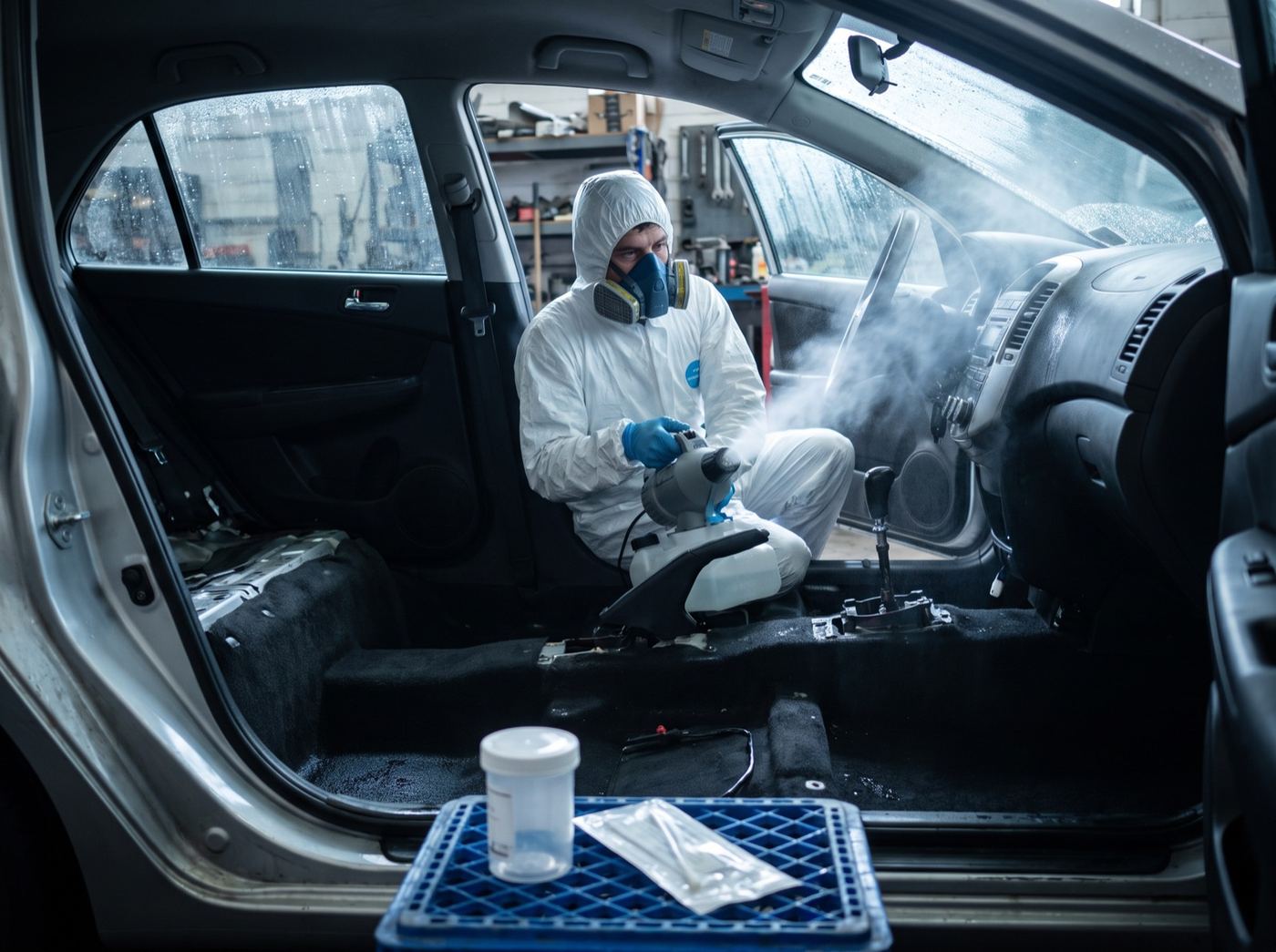
Mould in a car is a water problem first
Mould needs moisture. In a car, that means water got in somewhere: a blocked drain, a failed seal, a window left down, a flood, or a car that sat closed up through a wet month. Clean the mould without fixing the water and it comes back. We do both.
Break Check is a licensed motor vehicle repairer, not a detailer. We find the leak, test the interior at an accredited laboratory, treat it, repair the cause and put it all in writing.
How we remediate a mouldy car
- Find the source. We trace the water: door membranes, scuttle drains, sunroof drains, the air conditioning drain, windscreen and tail light seals, the boot and spare wheel well. A water source test shows whether it was rain or floodwater, or tap water.
- Test. Surface and air samples are analysed by Eurofins, an independent accredited laboratory. You get a mould toxicology report, not an opinion.
- Remove what cannot be saved. Carpet underlay and seat foam hold water for weeks. Where they cannot be dried and treated, they come out.
- Treat. Remediation is carried out by a CRC certified hygienist, using a non-toxic method that kills mould on surfaces and in the air, matched to the interior materials. The car is safe to drive away in.
- Fix the cause. The leak is repaired in the same licensed workshop (MVRL64052), so the water does not come back.
- Test again and document. A second Eurofins toxicology report after treatment confirms the result. Both reports and the treatment records stay on file, for you or for your insurer.
Who we do it for
Vehicle owners
A musty smell that will not go, white spots on the seats, black marks on the seatbelts, carpet that stays damp. Start with where the mould is, or why your car smells musty.
Insurers, assessors and loss adjusters
Every water-affected vehicle should be tested for mould, visible or not. Mould that is missed at the time of repair becomes the next complaint. We test, treat and document so the claim closes once. See mould remediation for insurers.
What it costs
Full remediation typically runs $1,500 to $12,500, depending on the interior materials and how far the mould has spread. Lab testing is a small fixed cost, quoted before we start. Writing off a late-model car instead is often around $60,000. More detail on car mould removal cost.
Why not a detail and an ozone machine?
Most car mould removal on offer is a detail followed by an ozone treatment. Ozone at levels that are safe for people does not reliably kill mould, and it does nothing about the water that let it grow. We explain why in ozone treatment for car mould. We start with the source and finish with a lab result.
Common questions
Can mould be fully removed from a car?
In most cars, yes. The water source has to be fixed, absorbent materials that cannot be treated have to be replaced, and the rest of the interior has to be treated. Surface cleaning on its own rarely holds.
Do you need to see the car before you quote?
We talk it through on the phone first. A firm quote comes after we have inspected the car, found where the water got in and seen how far the mould has spread.
Is my car a write-off because of mould?
Most cars found with mould are marked down as a total loss. Many of them did not need to be. Remediation costs a fraction of a write-off. A car that was flooded above the inner door sill is a different question, covered in flood damaged car: repair or write-off.
Is the treatment safe for children and pets?
The treatment is non-toxic and the car is safe to drive away in once it is done.
Do you work directly with insurers?
Yes. Insurers and assessors refer water-affected vehicles to us for testing, treatment and documentation. Use the insurance referral option on this page, or email the claim details.
Our method. Break Check's mould testing and remediation follow the research and methodology of Dr Close, who has spent a significant amount of time researching mould. Remediation is carried out by a CRC certified hygienist, with a Eurofins mould toxicology report before and after treatment.
Updated 21 November 2026
Why mould in a car is dangerous
A car cabin holds a few cubic metres of air. Mould spores in that space are concentrated, and the air conditioning blows them straight at the people inside every time the fan runs.
NSW Health lists a runny or blocked nose, eye and skin irritation and wheezing as effects of mould exposure. For people with asthma, breathing in mould spores can bring on an asthma attack. People with allergies, a weakened immune system or a chronic lung condition are more at risk, including of mould infection in the lungs.
Dead mould can still cause allergic reactions. Killing it is not enough. It has to be removed.
Most mouldy cars are written off
Most cars found with mould are marked down as a total loss. Many of them did not need to be.
- Full remediation
- $1,500 to $12,500, depending on how bad it is
- A typical late-model write-off
- Around $60,000
We find the water, remediate the interior and test again, so the car goes back on the road with a second Eurofins report on file.
Removal and testing
Where the mould is
Leaks and water damage
Guides
For insurers and assessors
Mould in your car? Start with an enquiry.
- We find where the water is getting in, and fix it
- Eurofins toxicology report, before and after
- Remediation by a CRC certified hygienist
- Non-toxic treatment, safe to drive away in
A water-affected vehicle on your file? Refer it.
- Eurofins toxicology report, before and after treatment
- Water source test: rain and floodwater, or a garden hose
- Remediation by a CRC certified hygienist
- Results and treatment records for the claim file
Tell us about the vehicle.
Vehicle owners get a call back with what we'd do and what it costs. Insurers and assessors get the referral booked and the policyholder contacted.
Prefer to talk? (02) 8551 7777
Referrals by email: [email protected]